
DISCOVER THE X FACTOR
This paper is presented on sports people who participate in sports which require two hands to help deliver power and maintain control of the given action. The sports covered in varying degrees in this paper are golf, cricket and baseball, although there are observations and applications to other pursuits including hockey, lacrosse and hurling. The findings only scratch the surface as to the total number of people participating in these sports and do not encompass statistics for all sports people.
There exists a statistical anomaly between the total number of sports people who should approach two handed sports opposite to their one sided tendencies compared to the number of these people who excel at a Professional level. Sports people playing these two handed sports have a distinct advantage if they are:
Naturally left handed with one handed movements encompassing power and control, but play two handed sports right handed
or are
Naturally right handed with one handed movements encompassing power and control, but play two handed sports left handed.
The sections, limbs and muscles of the human body all play an important part in any sporting action; the one part of the body that controls all of these actions in any of these endeavours is the brain. How the brain either consciously or sub-consciously controls these functions in sports people is a pivotal factor in determining how well an individual will make these actions work. Sports people who approach two handed actions, reverse to their one sided tendencies gain an advantage in reflex time and then bio mechanically also in strength.
The findings in this paper provide a direction for potential players of these sports, as well as parent’s, coaches, mentors and talent scouts on how best to approach and analyse the actions required. Statistics and information included in this paper was derived from research and data gathered from a number of sources via the internet and written publications, some of which has been formed into data and is attached as appendices.
READ ONLINE OR DOWNLOAD
To read this paper please click on the toggles below or alternatively Downloads the PDF version.
Michael Holden has been in the golf industry for over 39 years as an administrator, coach and part time player. As an Australian PGA Member for 38 years Michael has mainly been based in Australia but has also had some teaching and management experience in Asia. Michael has served in a range of positions at The Lakes Golf Club, Concord Golf Club, Riverwood Golf Club, Moore Park Driving Range, Singapore Island Country Club, Cypress Lakes Resort and East’s Leisure & Golf.
Coaching has been one of Michael’s passions in his appointments and it has always been a main part of his duties. He has amassed an amazing amount of experience across all levels of the game. From private tuition to clinics Michael has taught over 12,000 students and has furthered this teaching experience with study in a range of areas relating to golf and other sports.
A keen sports enthusiast Michael has played and been a spectator of many sports over the years. With his understanding of the golf swing he has used that knowledge in analysing human movement in other sports and the parallels that exist in a range of actions. Coupled with this study of the bio mechanics of many human actions he has also analysed how the human brain helps to control movements. He has also drawn some conclusions as to how the movements of general life and specific training can affect any given action required to play sports.
Michael is the Director of Golf at historic East’s Leisure & Golf in the Hunter Valley of New South Wales, a position he has held for over 27 years. He is still immersed in the golf industry and coaches golfers across a range of abilities virtually every day.
The author wishes to express sincere appreciation to the following people for their assistance indirectly and directly in the preparation of this manuscript. In addition, special thanks to my wife of twenty plus years Angela, my son Ryan and daughter Kiera, thanks for putting up with my manic sports enthusiasm.
- My immediate and extended family for your support, particularly my mother Margaret, father John and sisters Sue and Jenny. My cousin John Brewer and Aunty Lil who helped nurture my early development in golf at Concord Golf Club.
- My teachers, mentors and employers, all Australian PGA Professionals, in Richard Flood, Bruce Jackson, Klye Francis, Ross Herbet, Max Hawkins, Gary Edwin and Neil Anderson for their support and knowledge over my early years in golf.
- Max Garske, former CEO Australian PGA, for formalising the education of Australian Golf Professionals and for letting me finish my PGA Traineeship, possibly when I should have been asked to leave.
- Craig Moylan, left hand golfer but right handed human for one handed actions, for his help and advice with all things computer related and the Two Handed X Factor website.
- Left hander, Greg Norman for inspiring generations of Australian golfers including myself. If you read this paper Greg, apologies for drawing attention to some of your errant shots.
- Left-handed human and right handed golfer, Ben Hogan, who fought back from adversity to still perform amazing feats on the golf course and for penning his approach to golf.
- Hank Haney for his thoughts and approach to the golf swing.
- David Leadbetter for his thoughts and approach to the golf swing and for giving me the confidence to publish the following findings.
- Australian cricket legend and Australian selector, David Boon, for his thoughts on cricket.
- To Maitland Golf Club, its Members and Committees, for putting up with me for the last 14 plus years. I haven’t been treating you like lab rats, honest.
- To my fellow PGA Professionals John Onions and John Hufton for their input in this paper and for listening to my sporting theories for twenty seven plus years.
This paper is presented on sports people who participate in sports which require two hands to help deliver power and maintain control of the given action.
The sports covered in varying degrees in this paper are golf, cricket and baseball, although there are observations and applications to other pursuits including hockey, lacrosse and hurling. The findings only scratch the surface as to the total number of people participating in these sports and do not encompass statistics for all sports people.
There exists a statistical anomaly between the total number of sports people who should approach two handed sports opposite to their one sided tendencies compared to the number of these people who excel at a Professional level.
Sports people playing these two handed sports have a distinct advantage if they are:
- Naturally left handed with one handed movements encompassing power and control, but play two handed sports right handed
or are
- Naturally right handed with one handed movements encompassing power and control, but play two handed sports left handed.
The sections, limbs and muscles of the human body all play an important part in any sporting action; the one part of the body that controls all of these actions in any of these endeavours is the brain. How the brain either consciously or sub-consciously controls these functions in sports people is a pivotal factor in determining how well an individual will make these actions work. Sports people who approach two handed actions, reverse to their one sided tendencies gain an advantage in reflex time and then mechanically also in strength.
The findings in this paper provide a direction for potential players of these sports, as well as parent’s, coaches, mentors and talent scouts on how best to approach and analyse the actions required.
Statistics and information included in this paper was derived from research and data gathered from a number of sources via the internet and written publications, some of which has been formed into data and is attached as appendices.
Raise your hand
Which side of a human’s body dominates with power and or control of everyday single handed actions? Whilst this is not an earth shattering fact, almost every able bodied human on the planet is either right or left handed.
The definition of right or left handiness is the “unequal distribution of fine motor skills between the right and left hands”. Right handedness is defined by people who are more dextrous with their right hand; left handedness is defined by people who are more dextrous with their left hand. Cross dominance, or mixed handedness is being able to do different tasks with greater dexterity with different hands. Ambidexterity is exceptionally rare, and is defined by people who can do any task equally well with either hand.
Approximately 86% of humans are right handed with around 14% being left handed. A total of 2% of both right and left handed people are cross dominant, with 1% of the world’s population being truly ambidextrous.
The statistics on right and left handed rates of humans do vary dependent on the source, from 90% right to 10% left to 82 % right to 18% left. As a mean average the initial statement sets a base line. Of the total number of inhabitants around 2% of left or right handed humans are cross dominant given everyday tasks to perform, if you add to this the 1% of truly ambidextrous people, this makes a group of 3% of cross dominant or ambidextrous humans.
To pick up a heavy object; to brush ones teeth; to thread a needle or to throw or kick a ball, which side of the body instinctively achieves the objective. Further to these movements, which side of a person’s body does a reflex action come from? To protect your face from an approaching threat or stop yourself from falling over which side of your body’s limbs would you raise first?
In determining which side of the body is dominant for the purposes of this paper, which hand a person writes with is not always a window as to which side of their body leads actions requiring power and control. Dependant on where, how and at what point in human history they were educated they may be left-handed, however were taught to write with their right hand. In the days when humans wrote with quill and ink, as opposed to the ball point pen, they were taught to write right handed so that they did not drag their left hand through the wet ink.
The Brain
The human brain, as stated by Scott Huettel from the Centre for Cognitive Neuroscience at Duke University, “is the most complex object on the planet”. The brain is “wired up” in each individual in a myriad of different ways, to the end that all fields of Neuroscience cannot explain why certain actions are performed in each individual as they are. Instinctive actions performed by humans are dependent on how an individual’s brain is “wired up” in the main, and then as to the environment that a person will grow, be nurtured and then practice in.
When a human is born the first operations of the brain are initially genetic and then learnt, dependent on the environment of that individual. Up to the age of around three humans are still determining as to whether they are right or left-handed, or possibly cross dominant or ambidextrous. As to which side of the body that a human ends up favouring, other factors including the people that they are modelling themselves on, being taught by; or by cultural and religious practices, can all play a role.
A humans mirror neurons in the brain are most active up to the age of five in copying and working out how best to navigate the planet and its inhabitants, in movement and communication. This is the time when many of the skills we need to function are being “hardwired” into the main three sections of the brain in either, the brain stem, the cerebellum or the cerebral hemispheres, both right and left. These movements and skills encompass strength, control, reflex actions and communication all working in combination.
There are, of course, more subsections of the brain with 100 billion cells each sending 1000 to 10,000 synapses per day. Synapses are the junctions across which a nerve impulse passes from an axon terminal to a neuron, muscle cell, or gland cell. This neo cortex of the brain makes roughly 100 trillion connections per day in the average human with this information being transferred over 90 million metres of wiring packed in with other tissue. The brain, encompassing all its sections, occupies about one and a half litres of volume in the average human skull.
Through initial human development, and as a human continues to grow, a dominant side of the body is developed in line with the right to left statistics previously stated. Around 2% of right or left sided human’s will action base movements with either their right or left sides making them cross dominant, with a rare 1% of people being truly ambidextrous.
As to how the brain basically transfers all this information, in a right sided human the left cerebrum controls the right side of the body and the right cerebrum the left side. In left sided humans it is obviously reversed, with cross dominant or ambidextrous humans having their right cerebrum control their right side and their left cerebrum control their left side to varying degrees. These commands all work in with proprioception, or kinaesthetic sense, which is the sense that indicates whether the body is moving with the required effort, as well as where the various parts of the body are located in relation to each other. The cerebellum of the brain controls this sense which is often referred to as “muscle memory”. The muscles of the human body don’t have a memory as such, however the cerebellum in the brain which helps control these muscles does.
In a study for the French Institute of Sport, French Neuroscientist Guy Azemar concluded that left handed sports people had an advantage as the two halves of their brains were wired up more evenly. In the study that was conducted on the sports of tennis and fencing, he concluded that having the process of seeing a target and having it dealt with by the same hemisphere of the brain afforded that player an extra 20 or 30 milliseconds in reaction time. This is an interesting point when considering a dominant side of the brain, and how information is transferred to the body, as to which way some humans approach two handed actions.
Eye Dominance
Which eye is dominant in humans will also have an effect on reaction time and then the messages that are being relayed to the brain. Virtually all humans will develop a dominant eye through the course of their life. The eyes are of course the “window to the brain” that feed it with a large proportion of the information required to function in many sports.
Ocular dominance or eye dominance is the tendency to prefer input from one eye to the other. It is partially linked to right or left handedness, however the side of the dominant eye and the dominant hand do not always match, and this is because both hemispheres of the brain control both eyes. Each eye takes charge of a different half of the field of vision, and therefore a different half of both retinas. As studies have shown there is thus no direct correlation between eye dominance and handedness.
Approximately two thirds of the Earth’s population is right eye dominant and one third left-eye dominant, with a small portion of the population having neither eye dominant. Eye dominance is sometimes categorised as weak or strong. In normal vision there is a parallax effect and therefore the dominant eye is the one that is primarily relied on for precise positional information, this is especially important in sports which require a human to aim at a target.
It has also been asserted that cross dominance, in which the dominant eye is on one side and the dominant hand is on the other, is advantageous in sports requiring side on stances. Interestingly in some recent studies of professional baseball players, hand ocular dominance patterns did not show an effect on batting averages. Similarly, studies of South African professional cricketers also found that they were not more likely to have cross hand ocular dominance than the normal population. Whilst these conclusions have been tabled, the dominant eye must play a part in supplying the brain with the information needed to perform a given action.
Put Your Hands Together
Now most of the facts stated so far are for humans performing tasks with one side of their body. When both sides of the body are required to perform a task, and particularly two hands, what then happens?
How does a humans one sided tendencies, their brain and their eye dominance all work together to perform the action. What does the average human do to initiate and complete the task set before them and what does their brain and its genetic and learnt behaviour compel them to do? Do all humans follow their one sided tendencies, or do some humans do something different?
Oh No! – Two Hands
There are many statistics available on the rates of human beings on the planet and whether they are right handed, left-handed, cross dominant or ambidextrous. However, there were no real statistics that I could find on what humans do when two hands are placed on an object that requires power and control.
In the absence of reliable research and proven statistics for humanity, I believe that in line with the combined group of cross dominant and ambidextrous people around the world, about another 3% of right or left sided humans approach two handed actions opposite to their one sided tendencies. In basic terms this 3% group of people, who react to a power or control movement with one side of their body in general life situations, will instinctively revert to the other side for two handed actions.
This 3% of left or right sided humans will, when two hands are placed on a sporting implement, be they golfers, batsmen in cricket, batters in baseball, hockey, lacrosse and hurling will instinctively stand on the other side to make the action. The cross dominant or ambidextrous group of humans at another 3%, based on very simple logic, would have half who would approach two handed actions left handed and obviously half right handed, even though one side of their body may lead many of their everyday actions.
In some two handed sports, access to equipment and the sports rules can prevent a person from following their natural instincts. If a left sided human wished to play golf left-handed, but only has access to right handed clubs they will adapt and train themselves to make an action in that fashion, as has happened frequently in golf history .
As cricket, baseball, ice hockey and lacrosse equipment can be easily used right or left sided, it easier for humans to follow their instincts in these pursuits. Field hockey has rules that state that players must strike the ball from the right side only thus possibly inhibiting a certain number of left handed participants. These challenges can affect the natural process either negatively or positively. It is dependent on the sport, the equipment available and their natural predilection to the action that is required.
These statistics and assumptions become more interesting when a base line for humanity is established. If only 3% of human’s approach two handed actions in an opposite fashion to their one handed preference, and you include half the number of cross dominant or ambidextrous humans at another 3%, this accounts for only 4.5% of people who approach two handed actions in this manner. For the purposes of a base line statistic for this paper, let’s round up that 4.5% figure and say that 5% of the general population approach two handed actions in an opposite fashion to their one handed movements, and that 95% will approach two handed actions as they would their one handed movements.
At an elite level in sports that require two hands, and thus leading side movements, how many players have and currently approach these actions in reverse to their one handed tendencies? Do these people have an advantage at these actions in the sports outlined and how do all these skills work together to enable this to happen?
Sports and Numbers
The statistics quoted in the following chapter have by no means been an exhaustive appraisal of every human to participate in two handed sports. Only statistics from some elite levels have been, in each of the sports covered, analysed and to that end not to a finite degree.
As established previously for the human race, I believe that 95% of humanity approach two handed actions the same way that they approach one handed movements, and that 5% approach two handed actions in an opposite manner to their general one handed actions.
With this statistic as a starting point, following is some analysis for select groups of elite sportspeople across golf, cricket and baseball. There is no statistical analysis of players in field hockey, ice hockey, lacrosse and hurling, just some observations of these four pursuits.
Golf in General
Golf was initially the main focus of this study, however upon analysis this paper has rapidly expanded to include most two handed pursuits. I have tried to play golf, all be it inadequately for over 30 years, and have taught it in varying forms for some 27 years since commencing my PGA Traineeship in 1985.
It perplexed me in my early years of coaching as to why randomly, some people played golf right handed but were left handed for one handed actions and some were left handed but wanted to play right handed. This situation in my coaching didn’t arise very often, however I always made a mental note, to that end I became able to pick the people, both male and female, who were swapping over as they took to the action of a golf swing a little too easily.
I must admit that I have not kept a firm written record of the number of people that I have taught across clinics and individual lessons over the years; however it would conservatively be in excess of 9,000 students. Of this group I roughly estimate that around 450, or about 1 in 20, would have approached the game in the opposite fashion to their one handed tendencies. I don’t have a recollection of the rates of male to female students from this group.
I again have never kept a record of right to left hand golfers, however according to a 2007 National Golf Foundation (NGF) consumer survey 7.4% of adult American golfers play left-handed. How many of those lefty golfers in the NGF survey are basically right-handers, who find it more natural to play two-handed sports left-handed, is unknown. On the flip side of this statistic how many of the 92.6% of right handed golfers who play are left-handed, who find it more natural to play two-handed sports right-handed? There are no statistics available that can differentiate between these two groups.
Further to defining these groups is an explanation by Henry Gulliton in an article written for “The American Golfer Magazine in June 1928” entitled “Southpaws”, Henry quoted the following;
“…There exists three very distinct varieties of the southpaw, two of them radically different from the common or garden variety.
These are:
1) The left-hander who plays from his left side—the common type.
2) The left-hander who plays from his right side.
3) The right-hander who plays from his left side.
The first and third varieties are commonly classed as southpaws, but the unit of the second variety, which perhaps embraces the best players of the species, is erroneously accepted as a right-hander, although really, of course, he is less of a right-hander than his brethren in the third classification.”
In addition to Henry Gulliton’s explanation of how people approach golf, are the following quotes from a collection of elite players and teachers of the game. All relate to the importance of the left side in the golf swing, obviously in relation to people playing golf right handed.
Chi Chi Rodriguez quoted in the Dallas Times Herald in 1987; “I think if you do research you’ll find most of the great golfers were left handed.”
Tom Watson is quoted as saying; “The left side establishes the radius of the golf swing. For the swing to be successful, the left side must guide the action from start to finish.”
Bob Toski is quoted as saying; “I keep hearing people who should know better, teachers and talented tour players among them, say that golf is a right-sided game. I want to set the record straight once and for all. To start with, played properly, golf is a two-sided, two-handed game. But just as you need someone to govern the land or lead the band, the golf swing has a leader too–and it’s the left side, not the right.”
Hollis Stacy winner of 3 US Woman’s Opens; “My left hand leads from start to finish. I come down hitting against the firm left side braced by the last three fingers of my left hand.”
Byron Nelson was quoted as saying; “On the backswing you should feel that you are starting the club back with your left side moving together with your left hand and arm. The left hand must be firmly in control. The relaxed right side is just pushed out of the way.”
Dick Aultman, Golf Digest instruction editor has said; “There is more or less a direct correlation between improved scoring and the degree that the left side muscles are trained to dominate the backswing.”
Joe Norwood the author of “Golf-O-Metric”; “There is nothing better for good golf than an extended left arm during the swing. Without this holding power it isn’t possible to handle a club lightly and swing without effort.”
Bobby Jones said in his book “Bobby Jones on Golf”; “In my conception of the stroke it is always the left arm that should be the guiding member. In the case of nearly all good players, it is the left arm that starts and controls the direction of the stroke until it comes time to hit.”
Byron Nelson said in his book “Shape Your Swing the Modern Way”; “I don’t know of a good player out there today who doesn’t control the swing with the left side. By 1936 I felt I was controlling the backswing with the left side. But I knew I was getting the power from the right side, not early in the swing but late.”
Lee Trevino said in his book “Groove Your Golf Swing My Way”; “I don’t think most amateurs realize the tremendous left-hand control the pros have built up over the years of hitting several hundred thousand golf shots. I agree that the right hand is necessary for power in golf, but I also feel that for most weekend golfers too much right-hand dominance–or better yet, too little left-hand control–is the major reason why they find it so difficult to put that clubface solidly into the back of the ball with any degree of consistency.”
Ben Hogan was quoted as saying; “reverse every natural instinct and do the opposite of what you are inclined to do, and you will probably come very close to having a perfect golf swing”.
Ernest Jones was quoted as saying; “Understand that golf is neither a right handed nor left handed game, but a two handed one”.
As so many have said the importance of the leading side in the golf swing is pivotal to its success. With observations, quotes and theories from a collection of famous golfers, coaches and observers of the game aside, the analysis of some data from men’s and then women’s Majors in the following creates some interesting findings.
Men’s Golf Major’s and Some Observations
Analysing Men’s Major Championship winners in golf in the British Open, the US Open, the US PGA and the US Masters the statistics are compelling. Up until the end of 2010 there have been 415 Majors played since the first British Open in 1860, the first US Open in 1895, the first US PGA in 1916 and the inaugural Masters in 1934. There were obviously years where some of these Championships were not played due to World Wars and the 1871 British Open, when controversy over the administration of the event saw it unable to be played.
Of the 415 winners of these events only three players have played left-handed, they are Bob Charles, Mike Weir and Phil Mickelson. This group of golfers obviously stands out and is easy to highlight from every other Major Winner. It is well documented that they all perform one sided actions with their right side.
Bob Charles had one Major victory in the 1963 British Open, Mike Weir in the 2003 Masters and Phil Mickelson in the 2004, 2006 and 2010 Masters and the 2005 PGA. Only six of the 415 Majors have been won by left hand golfers, all of who are right handed for their one handed movements.
Bob Charles said in his book “Left-Handed Golf”, “I cannot see anything odd about my playing the game left-handed. In fact, it is ‘natural’ for me to hit the ball this way, and the truth of the matter is that I am otherwise a right-hander,” “The only time I do things as a southpaw is when I hold an object with both hands, such as a baseball bat or cricket bat and a golf club.”
Mike Weir, Golf Professional and amateur ice hockey player, famously wrote to Jack Nicklaus in 1984 at the age of 14 to ask “which way he should approach golf”. He posed the question that whilst being right handed he had a more powerful ice hockey shot when firing left handed. Jack obviously advised Mike correctly as to the best approach for his golf and Mike keeps Jack’s framed letter at his home to this day.
Phil Mickelson wrote in his book detailing his winning round at the 2004 Masters, “One Magical Sunday”, “I’ve always been naturally right-handed. Virtually the only thing I do left-handed is swing a golf club,”
With the left handed group established, this now leaves 409 Majors won by right handed golfers up to the end of 2010. I haven’t had the time or the research capabilities to establish all of the other 409 winner’s preferences to one handed movements in their general life. I have confirmed however, through biographies, articles, common knowledge and observation that a least another 107 Majors have been won by right handed golfers who perform one sided actions left-handed, or at the very least were or are, cross dominant or possibly ambidextrous. This information is outlined in Golf Data and Figures.
A number of these players have been confirmed that they are left handed for one handed actions through data collated via the internet, which sometimes cannot be absolutely trusted as a source of facts. Information can sometimes be misinterpreted by people, just because a right handed golfer may say that they lead with their left side, doesn’t necessarily make them left handed in general life.
If I have claimed that a player in this list is, or was left handed for single sided actions, cross dominant or ambidextrous and anyone, especially if you are that player, has evidence that they either were or are not, please contact the Two Handed X-Factor website and let me know.
This group of Major Winners, in no particular order, includes:
- Bobby Jones
- Sam Snead
- Ben Hogan
- Jack Nicklaus
- Johnny Miller
- David Graham
- Curtis Strange
- Greg Norman
- Nick Faldo
- Trevor Immelman
- Tom Kite
- Jimmy Dermaret
- Nick Price
- Arnold Palmer
- Fuzzy Zoellar
- Tom Watson
- Byron Nelson
- Walter Hagen
- Arnaud Massey
- Raymond Floyd
- Vijay Singh
- John Goodman
- Michael Campbell
This group of players combine to contribute another 107 majors won by humans who perform one handed actions left-handed, cross dominant or ambidextrous and then the two handed actions of a golf swing right handed. This is in addition to the 6 Majors won by left handed golfers who perform one handed actions right handed.
This now makes a confirmed total of at least 113 Major Tournaments won by golfers who approach the sport in an opposite fashion to their one handed actions, representing 27.23% of the total number of Majors played. For all the other winners how many were or are left-handed; cross dominant or ambidextrous that still have to be established. I do have partial evidence of quite a few, but am unable to confirm the information absolutely.
There still are a large number of players, particularly from yester year, to possibly add to this group with pictures of some Champions all holding the relevant trophy that they have just won in their left hand. If I had just won a Major and didn’t want to drop that Trophy in front of everybody watching, I am sure I would hold it in my dominant hand.
There are also endless pictures and what seem to be trivial observations, of many Major Championship winners performing basic tasks left sided. To name but a few; Old Tom Morris can be seen in a photograph holding his pipe in his left hand; Harry Vardon can be seen crossing his left leg over his right on the front page of his book and Young Tom Morris can be seen holding his coat back with his left arm to show the British Open Belt Buckle. Winners of the British Open were presented with a belt buckle up until 1872 when that trophy was replaced by the now famous Claret Jug.
Hale Irwin was said to have spent countless hours as a child cutting grass with a scythe around his parent’s property with his left arm leading the action. Ed Furgol smashed his left arm at the age of 12 and spent tireless hour’s exercising his now shorter left arm to strengthen it. Gene Sarazen was said to have an abnormally strong left hand and Billy Burke lost his left hands little finger in a foundry accident.
Despite much of this anecdotal evidence I will concede that all Major Winners unconfirmed were right handed golfers playing right handed and base my statistics on the numbers confirmed.
To that end however, if anyone reading this paper has proof that any Male Major Winner not listed above was left handed for one handed actions, please contact the Two Handed X-Factor website. Be it you are the player, a relative of the player’s involved, observant student of the game and life, or just well read, please log onto the website and let me know.
Even with many male golfers unconfirmed, at the established level of 5% of humans swapping over for two handed actions, this should mean statistically that 21 Majors played by males should have been won by this group. Already 113 are confirmed to be having been won by players who play reverse to their one handed tendencies or who are either cross dominant or ambidextrous people. Statistically this obviously points strongly to this specific group of humans having a distinct advantage to approaching the golf swing in the fashion that they do.
The only downside of this approach to golf, which I have observed, is in the ability of this group to be able to release the club back to square at impact. At times, and sometimes famously under pressure, the stronger and quicker leading side will get ahead of the action causing a blocked shot. Some of Greg Normans’ blocked shots on the final hole of Majors are infamous in golf’s recent history as are some of Phil Mickelson’s shots. Apologies Greg and Phil, I am sure that these are shots that you don’t wish to be reminded of.
Men’s Major Championship winners aside, how many players who have reached a Professional level on all the tours of the world or played golf at an elite amateur level have approached the game this way? Many Tour players that I have observed are either left-handed, cross dominant or possibly ambidextrous.
Even though left handed golfer Bubba Watsons writes with his left hand, in his playoff against Martin Kymer in the 2010 US PGA he was looking through his golf bag for a suitable ball to compete in the playoff with his right hand.
Many Tour players sign their autographs opposite to the way they play including, Henrik Stenson; Len Mattice and Edorado Molinari, who all play right handed and sign left handed. Richard Green, Nick O’Hern, Greg Chalmers and Steve Flesch all play left handed and sign right handed. Sergio Garcia throws golf balls to his caddy and the crowd left handed which once famously prompted British Professional Mark James to say “he must be amphibious”. Legendary Canadian player and revered ball striker Moe Norman who played the US Tour briefly was left-handed.
With just these basic statistics and observations, the numbers strongly point to these male golfers as having an advantage over their “one sided” opponents. With the inbuilt benefit of strength and reaction time, that is required to perform a golf swing under the immense pressure of a Major Tournament, they have the Hidden X Factor required to prevail.
As already stated, of the 415 Men’s Majors played to the end of 2010, statistically at 5% of the total only 21 should have been won by male golfers approaching golf opposite to their one sided tendencies. With many more winners of these Championships to be possibly confirmed as left-handed, cross dominant or ambidextrous people why have so many, currently 113, been shown to be won by this group of players?
Ladies Golf Majors and Some Observations
Major Golf Championships played by female golfers don’t date back quite as far as Men’s Majors with the US Open, the LPGA Championship, the British Open and the Kraft Nabisco making up the four Ladies Majors. Up until the end of 2010 there have been 182 Majors played since the first US Open in 1946, the first LPGA Championship in 1955, the first British Open in 1976 and the inaugural Kraft Nabisco in 1983.
There were two years in which the 1969 LPGA Championship and the 1983 British Open tournaments were not played. Some of these Tournaments were played before the dates stated, however are not classed as official Major Championships.
Of the 182 Majors played not one has been won by a female left-handed golfer. In fact, in general tournaments, only one left handed female golfer has won on the American LPGA Tour in Bonny Bryant, recording a victory in the 1974 Bill Branch Classic. In fact in the history of the US LPGA there has only been four players to play left-handed, including Bonny, the others being Angela Buzminski who played from 2002 to 2005; Kelly Lagedrodt from 2004 to the present and Malinda Johnson in 2005.
As with Men’s golf I haven’t had the time or the research capabilities to establish all of the 182 winner’s preferences to one handed movements in their general life. I have confirmed however, through biographies, articles, common knowledge and observation, that at least 11 Women’s Majors were won by right handed golfers who performed one sided actions left handed or at the very least were cross dominant or possibly ambidextrous. This information is outlined in Golf Data and Figures.
Again as with Men’s Majors a large number of these players have been confirmed as to whether they are left handed through information via the internet, which sometimes cannot be absolutely trusted as a source of facts. Information can sometimes be misinterpreted by people, just because a right handed golfer may say that they lead with their left side, doesn’t necessarily make them left handed in general life.
If I have claimed that a player in this list is or was left handed for single sided actions and anyone, especially if you are that player, has evidence that they either were or are not, please contact the Two Handed X-Factor website and let me know.
This group of players, in no particular order, includes;
- Kristie Kerr
- Sally Little
- Beth Daniel
- Pat Hurst
- Ayako Okamoto
- JoAnne Carner
- Hollis Stacy
This group of golfers, who approach the sport in an opposite fashion to their one handed actions, represented a total of 6.04% of the total number of Women’s Majors played. For all the other winners how many were left-handed, cross dominant or ambidextrous that I cannot establish positively? As with many male players I do have partial evidence of quite a few but am unable to confirm the information absolutely.
Whilst there are many players unconfirmed the 11 Championships that have been won by players who are left side dominant is not statistically that far outside the 9 that should have been won by this group. Analysis of golfers in both the female and male groups has been difficult in order to establish players one sided preferences as the sport gives little clue to which side dominates single sided actions.
Again to that end, if anyone reading this paper has proof that any Ladies Major Winner not listed above was, or is, left handed for one handed actions please contact the Two Handed X-Factor website. Be you the player themselves, a relative of the players involved, observant student of the game and life, or just well read please log onto the website and let me know.
Cricket Played by Males
Cricket is relatively easy to establish which players have a single dominant side and then as to how they approach the two handed functions of their game. When not coaching or working in the golf industry, one of my next favourite pastimes is to watch cricket, sometimes while having the odd beverage as a large section of Australians do.
Cricketers when fielding will throw the ball back to the centre with one hand, in general of course their dominant arm. When batting and placing two hands on the bat or “willow” however, how many players bat on the opposite side as to which they threw?
Of the top 30 Test Batsmen of all time, as at November 2010, there were 5 players who batted left and threw right representing 16.67% of the total. One player was totally left handed representing just 3.33% of the total, well under the statistical benchmark for humanity. 80% of the top 30 Test Batsmen of all time both batted and threw right handed. This information is outlined in Cricket Data and Figures.
Of the top 20 One Day Batsmen of all time, as at November 2010, there were 3 players who batted opposite to their one handed tendencies representing 15% of the total. Two batted left and threw right with 1 player batting right and throwing left. One player was totally left handed representing just 5% of the total; again well under the statistical benchmark for humanity. 80% of the top 20 One Day Batsmen both batted and threw right handed. This information is outlined in Cricket Data and Figures.
Of the 9 countries that play test and one day cricket each country, as at November 2010, had a squad of players ranging in numbers from 23 to 32 to draw from to construct their side for an upcoming tour and or match. Each countries squad’s had a total player base at this time totalling 252 players. This figure was derived from the International Cricket Council (ICC) listings of national squads, however there were some discrepancies from the ICC listings and other sources.
Of the 252 players in all these squad’s 58 players in total threw or bowled with one side of their body and then batted the other way around. This represented 23.02% of the 252 players and was far more than the 13 players which should have represented this group at the established rate of 5% of humans who should approach batting reverse to the one handed tendencies.
Players who threw and bowled left handed and batted left handed totalled 36 and represented 14.29% of the group, which is right on the base line average for the total left handed population of the planet.
The numbers of players and subsequent squad statistics for each individual country at November 2010, as outlined in Cricket Data and Figures, is as follows. Some of the varying rates from one country to another could possibly be a reflection of coaching techniques and or cultural and religious practices.
Australia – 32 players in their national squad with 11 of the total approaching bowling or throwing with one side of their body and then batting in the opposite fashion. This represented 34.38% of the total, which statistically should have been a representation of about 2 players. There were 5 wholly left handed players representing 15.62%, which is just over the established rate of left handed people. Right on 50% of the squad were right handed for one sided actions and then batting.
England – 23 players in their national squad with 5 of the total approaching bowling or throwing with one side of their body and then batting in the opposite fashion. This represented 21.74% of the total which statistically should have been a representation of about 1 player. There were 4 wholly left handed players representing 17.39%, a percentage just over the established rate of left handed people. 60.87% of the squad were right handed for one sided actions and then batting.
New Zealand – 30 players in their national squad with 4 of the total approaching bowling or throwing with one side of their body and then batting in the opposite fashion. This represented 13.33% of the total which statistically should have been a representation of about 2 players. There were 3 wholly left handed players representing 10%, under the established rate of left handed people. 76.67% of the squad were right handed for one sided actions and then batting.
India – 31 players in their national squad with 5 of the total approaching bowling or throwing with one side of their body and then batting in the opposite fashion. This represented 16.13% of the total which statistically should have been a representation of about 2 players. There were 4 wholly left handed players representing 12.90% which is just under the established rate of left handed people. 70.97% of the squad were right handed for one sided actions and then batting.
Pakistan – 32 players in their national squad with 6 of the total approaching bowling or throwing with one side of their body and then batting in the opposite fashion. This represented 18.75% of the total which statistically should have been a representation of about 2 players. There were 5 wholly left handed players representing 15.62%, just over the established rate of left handed people. 65.63% of the squad were right handed for one sided actions and then batting.
Sri Lanka – 29 players in their national squad with 6 of the total approaching bowling or throwing with one side of their body and then batting in the opposite fashion. This represented 20.69% of the total which statistically should have been a representation of about 1player. There were 4 wholly left handed players representing 13.79%, virtually the same as the rate of left handed people. 65.52% of the squad were right handed for one sided actions and then batting.
West Indies – 28 players in their national squad with 7 of the total approaching bowling or throwing with one side of their body and then batting in the opposite fashion. This represented 25% of the total which statistically should have been a representation of about 1 player. There were 3 wholly left handed players representing 10.71%, under the established rate of left handed people. 64.29% of the squad were right handed for one sided actions and then batting.
Bangladesh – 23 players in their national squad with 4 of the total approaching bowling or throwing with one side of their body and then batting in the opposite fashion. This represented 17.39% of the total which statistically should have been a representation of about 1 player. There were 5 wholly left handed players representing 21.74%, well over the established rate of left handed people. 60.87% of the squad were right handed for one sided actions and then batting.
South Africa – 24 players in their national squad with 10 of the total approaching bowling or throwing with one side of their body and then batting in the opposite fashion. This represented 41.67% of the total which statistically should have been a representation of about 1 player. There were 3 wholly left handed players representing 12.50%, which is just under the established rate of left handed people. 45.83% of the side were right handed for one sided actions and then batting.
Whilst there was no analysis of a player’s specialty in the game between batting and bowling the summary of statistics for elite male cricketers who bat on the same side as they throw was as follows;
- The two groups of all time leading batsmen in the Test and One Day areas were above the 5% of humans who should approach the sport in this fashion at 16.67% and 15% respectively.
- The total number averaged for the 9 countries cricket squad’s was 23.02%, however in individual countries cases this ranged from 13.33% for New Zealand to 41.67 % for South Africa’s squad.
With just these basic statistics the numbers point to these male cricketers having an advantage over their “one sided” opponents. With the inbuilt benefit of strength and reaction time on their leading side that is required to hit a cricket ball travelling at up to 160kms per hour they have the Hidden X Factor required to bat in cricket at this elite level.
Cricket Played by Females
Women’s cricket doesn’t have, as does women’s golf, quite the same history and base of statistical information as does the men’s game.
Of the 5 countries that play test and one day cricket each country had a squad, as at February 2011, of players ranging in numbers from 14 to 18 to draw from to construct their side for an upcoming tour and or match. Each countries squad’s had a total player base totalling 81 players. This figure was derived from many different sources and discrepancies from the ICC listings did vary.
Of the 81 players in these squad’s, 11 players in total threw or bowled with one side of their body and then batted the other way around, this represented 13.58% of the 81players and was more than the 5 players that should have represented this group, at the established rate of 5% of humans who should approach batting reverse to the one handed tendencies. Only 4 players of the total were left handed for both batting and bowling which represented 4.94%, well under the expected 14% average.
The numbers of players and subsequent squad statistics for each individual country, as at February 2011, is as follows and is outlined in Cricket Data and Figures. Some of the varying rates from one country to another could possibly be a reflection of coaching techniques and or cultural and religious practices.
Australia – 18 players in their national squad with no player approaching bowling or throwing with one side of their body and then batting in the opposite fashion. There were 2 wholly left handed players representing 11.11%, which is just under the established rate of left handed people. 83.34% of the side were right handed for one sided actions and then batting with 5.55% unconfirmed as to their bowling or throwing arm.
England – 17 players in their national squad with 1 player approaching bowling or throwing with one side of their body and then batting in the opposite fashion. This represented 5.88% of the total which statistically is in line with the 5% of humans who should approach the action in this fashion. There was 1 wholly left handed player representing 5.88%, well under the established rate of left handed people. 82.36% of the side were right handed for one sided actions and then batting with 5.88% unconfirmed as to their bowling or throwing arm.
India – 15 players in their national squad with 1 player approaching bowling or throwing with one side of their body and then batting in the opposite fashion. This represented 6.67% of the total, which statistically is almost in line with the 5% of humans who should approach the action in this fashion. There were no left handed players obviously well under the established rate of left handed people. 73.33% of the side were right handed for one sided actions and then batting with 20% unconfirmed as to their bowling or throwing arm.
New Zealand – 17 players in their national squad with 6 players approaching bowling or throwing with one side of their body and then batting in the opposite fashion. This represented 35.29% of the total which, statistically should have been a representation of about 1 player. There were no left handed players obviously well under the established rate of left handed people. 41.18% of the side were right handed for one sided actions and then batting with 23.53% unconfirmed as to their bowling or throwing arm.
South Africa – 14 players in their national squad with 3 players approaching bowling or throwing with one side of their body and then batting in the opposite fashion. This represented 21.43% of the total which statistically should have been a representation of about 1 player. There was 1 wholly left handed player representing 7.14%, well under the established rate of left handed people. 57.14% of the side were right handed for one sided actions and then batting with 14.29% unconfirmed as to their bowling or throwing arm.
Whilst there was no analysis of a player’s specialty in the game between batting and bowling the summary of statistics for elite female cricketers who bat with the same arm as they throw was as follows.
- The total number averaged for the 5 countries cricket squad’s was 13.58%, however in individual countries cases this ranged from 0% for Australia to 35.29 % for New Zealand’s squad.
- Whilst higher than the expected 5% of humans who should approach batting in this fashion the rate for Females was lower than the Men’s statistical total.
With just these basic statistics, the numbers point to these female cricketers having an advantage over their “one sided” opponents. With the inbuilt benefit of strength and reaction time on their leading side that is required to hit a cricket ball travelling at up to 140kms per hour they have the Hidden X Factor required to bat at this elite level.
Baseball Played by Males
As is cricket, baseball is “relatively easy” to determine which players swap from their dominant arm to throw or pitch as to which players bat the other way around. With reliable statistics dating back to 1882 from Professional Baseball played by males in the USA, it is easy to see the anomalies in relation to how the majority of the population would approach the actions required to play the sport.
The “relative” in the first statement is a little unknown as with baseball a player catches the ball with one hand and throws with the other. Do all players catch with their weaker side and throw with their dominant side or do some players catch with their stronger and reflex side and throw with the other? I would imagine that the position a player fields helps to determine as to whether they need quick reflexes in close to the batting diamond or a more powerful throw from the outfield. As baseball is not played at the same elite level in Australia, as it is particularly in the United States, I do not have the same years of acquired knowledge as to cricket.
There are also some aspects of the game that give a right or left handed approach an advantage. Left-handed batters seem to have an advantage to right handed pitchers as the ball in general will swing in to the batter rather than away and obviously right handed batters have an advantage to left handed pitchers. With these considerations in mind the following statistics provide some interesting conclusions.
There are 41 US based Professional baseball players of all time to achieve a batting average of .325 or better, as at November 2010. Of this approximately 2 players statistically should approach their batting in the opposite fashion to their one handed movements given the 5% of humans who approach two handed actions this way. Of the 41 players, 10 batted left handed and threw right handed, making this group 24.39% of the total. No players batted right handed and threw left handed. This group included Ty Cobb as the all time leader with an average of .3664 and Joe Jackson at third with an average of .3558. This information is outlined in Baseball Data and Figures.
It was also interesting to note that there were another 15 wholly left handed batters and throwers in the group of 41 representing 36.59%. Statistically this group should have been around 6, in terms of the 14% of left hander’s who populate the world.
With this group of 15 lefties, and the 10 who batted left and threw right this made a total of 25 left handed batsmen from the top 41of all time representing 60.98%. Obviously there were only 16 players who batted and threw right handed representing 39.02%. I would assume this statistic leads to the fact previously stated, that right handed pitchers throwing to left handed batsmen with the ball curling in rather than away, give these left handed batsman a distinct advantage in making consistent contact with the ball.
The leading home run hitters of all time also provide some more compelling statistics. Of the top 200 home run hitters, as at November 2010, 47 either batted from both sides or threw with one side but batted on the other. Of this group 33 batted left and threw right with only 1 player batting right and throwing left.13 players batted both left and right, being either cross dominant or ambidextrous, making this group 6.5% of the total and above the 3% of people who should approach the action in this fashion. Of this group of 13 cross dominant or ambidextrous players, only 1 threw left handed and batted right handed. This group as a total of 47 should have been a representation of about 10 players given the world’s total populations statistical benchmark of 5%. This made this group almost 23.50% of the total number of 200 players. This information is outlined in Baseball Data and Figures.
Wholly left handed players contributed 32 of the 200 leading home run hitters coming in at 16%, although this almost falls into line with the 14% of left hander’s in the world. The total of left handed players and right hander’s who batted left handed as a group again made a huge percentage of the total, with 77 of the 200 equalling 38.50%. 60.50% of the top 200 home run hitters of all time batted and threw right handed. There was one player representing 0.5% who batted right handed and threw left handed and 1 player representing 0.5% who batted both right and left-handed and threw left-handed.
Of this group of 200 players who have hit the most home runs it was also interesting to note that most were over 6 feet or 183 centimetres in height. There were only 27 batsmen of the 200 who were less than 6 feet tall, with 19 of them being close to the mark at 5’10” or 5’ 11”. This raises another subject, for a later date, as to the advantage of leverage created by limb length in the deliverance of power in all the sports covered in this paper.
Of the top 200 the stand outs in this group that was less than 6 feet tall were Mel Ott at 23rd with 511 home runs; Yogi Berra at 74th with 358 home runs and Matt Stairs at 176th with 265 home runs. Yogi Berra in fact stood at only 5’ 7” or 170 centimetres tall. The advantage that enabled these three players to achieve this amazing feat given their lack of leverage, they all threw right handed and batted left-handed.
Given baseballs actions of catching and throwing, are there more male players from the groups analysed who may have been dominant with a particular side but caught with it instead of threw? The findings as they stand, again prove an advantage to approaching this two handed action of batting in this fashion. These findings would only be enhanced through further analysis of these players as to how they throw as to which side of their body is actually dominant.
Baseball Played by Females
Women’s baseball doesn’t have, as does women’s golf, quite the same history and base of statistical information as does the men’s game. In keeping with the theme of this paper and analysing the professional pursuits of each sport I have drawn the following statistics from the All American Girls Baseball League, as outlined in Baseball Data and Figures.
This League was played between 1943 and 1954 and was created in response to the lack of male baseball due to the Second World War. Phillip K Wrigley, the chewing gum mogul created the competition in the autumn of 1942. Over the 12 years of the competition and a fair amount of controversy, 626 players competed for 16 different teams that played over this time until the League was disbanded. The League, and the feats of these pioneering ladies, was documented in the 1992 movie A League of Their Own.
Of the 626 players listed on the All American Girls Baseball League website, 206 of these players did not have complete statistics as to how they batted or threw. Of the 420 players that did however, 36 threw either right or left handed and then batted reverse, with 9 of this group batting from both sides. One player, Gene Visich, batted left handed and threw from both sides. This group of 36 represented 8.81% of the total number and whilst higher than the 5% expected for this group was not an overwhelming statistic. Only 23 of the 420 players threw and batted left-handed, representing 5.48%, well under the expected 14% average. 85.71% of these female players batted and threw right handed.
The findings didn’t prove an overwhelming advantage to approaching this two handed action of batting in a reverse fashion for female participants. Across baseball and cricket, whilst the groups sampled varied in size, there was a disproportionate statistical result between these elite players in female and male competition. Golf still has too many Female Major Winners unconfirmed to draw this conclusion for its results, but does have a very low level of left-handed participants.
Hockey – Field and Ice
Hockey, in both its forms of Field and Ice, again provides a great study of two handed actions and the application to these sports. Whilst I don’t have hard statistics on either sport to prove an advantage of players approaching these actions opposite to their one handed movements, there are some observations which support the findings from the other sports covered. These sports, and particularly field hockey, do have some rules that can inhibit a players natural ability from approaching actions a certain way.
Field hockey sticks can only be used right handed for shots requiring power. The sticks are rounded on the back side and whilst this side can be used for dribbling, can’t be used to strike the ball. This obviously stops left handed people from being able to play the sport unless, with two hands they prefer to strike the ball right handed. Right handed people can of course play but would some of them be able to strike the ball more powerfully left handed? To that end how many top field hockey players are left handed with one handed actions? I would envisage that this figure would be inordinately more than the 5% that it should be in line with the total population.
When playing ice hockey sticks can be used either right or left handed for all shots requiring power and control. In the absence of detailed statistics and just observations Wayne Gretzky, or as he is known in Ice Hockey as “The Great One”, sets the standard.
Wayne’s records still stand to this day with the most goals in a season, and career, as well as the most assists in allowing other players to score. Although right handed, Wayne played ice hockey left handed in scoring the majority of his goals when absolute power was required. As a junior he was a talented baseball and box lacrosse player, box lacrosse is the indoor version of lacrosse. Without being able to observe Wayne playing these sports I would assume that he approached the two handed functions of both left handed.
Wayne also plays golf to a reasonable level having even competed in the US PGA Tours Skill Challenge Tournament, however he plays golf right handed after approaching the other two handed pursuits of his life left handed. If you ever read this paper Wayne, don’t take offense, but you would have made a far better left handed golfer given the skills and strengths you would have brought to that approach.
If any Field or Ice Hockey players, coaches or spectators have observations or thoughts on the findings in this paper please contact the Two Handed X-Factor website and give me your feedback and please fill out the survey attached to the site. Without statistics to back my observations and having not played these sports at any level, the application of the theories outlined crossing over from golf; cricket and baseball could seem different to acceptable methods of coaching or play.
Lacrosse and Hurling
Other sports were the dominant side leading the action would be an advantage are Lacrosse and Hurling. I have no statistics on either sport, however from watching both sports being played it can easily be seen that in the main cross dominant or ambidextrous skills and dominant sided actions are desirable to play both sports at a high level.
In Lacrosse a player’s ability to pass, catch and propel the ball all whilst being checked by opponents would be enhanced by strength and quick reflex actions on both sides of the body. The action of passing or throwing in the main, sees the hands separated on the crosse, or crook, with power being generated with the pulling down of the lower hand and the pushing forward of the top hand. This combined with the leverage created by the racquet sees the ball being able to be propelled at high speed. Because the hands are not placed as closely together as in the other sports covered the action is not necessarily dependent on a stronger leading side movement. Strength in both sides of the body would be a definite advantage in this sport.
It would be interesting to see how many Lacrosse players are either cross dominant, ambidextrous or are right handed propelling the ball on their left side or left-handed propelling the ball on their right side as their more powerful action. The proportions of these players from male to female would also provide an interesting insight into the brains functions. Again, given the findings in this paper for other two handed pursuits I would be sure that this approach would be beneficial.
Hurling again provides a great study of the action of the right and left sides of the body. As the hands are fairly close together on the hurley, or caman, the action of hitting the ball and having the stronger and quicker reflex side of the body lead is an advantage. Players can only take three steps with the ball, or sliotar, in hand and must balance the ball on the caman whilst running and avoid being checked by their opponent’s. As with Lacrosse, again cross dominant or ambidextrous skills would be of great benefit in this sport.
In striking the sliotar, it can be struck from the right or left side in the air or from the ground. In observations of the game players under pressure from an opponent use either side of their body to affect a strike. When wanting to propel the ball with as much power as possible though, and with time for a player to set themselves, many hurling shots are struck against the right side similar to a two handed back hand in tennis leading to the fact that these players are right handed.
In observations of the game being played on many occasions, players will catch or slap the ball with their right hand as allowed by the rules and then hit against their right side to strike the sliotar to a position on the field or for goal. Goal keepers will regularly strike the ball out from goal to the other end of the ground against their right side and many of the top hurling goals ever scored have been by players also hitting against their right. As with Lacrosse, it would be interesting to see how many Hurling players are either cross dominant, ambidextrous or are right handed propelling the ball against their right side or left handed propelling the ball against their left side as their more powerful action. Yet again, given the findings of this paper for other two handed pursuits and my observations of hurling, hitting against the right side for right handed players and against the left for left-handed players would provide the most powerful strike.
If any Lacrosse or Hurling players, coaches or spectators have observations or thoughts on the findings please contact the Two Handed X-Factor website and give me your feedback and please fill out the survey attached to the site. Without statistics to back my observations and having not played these sports at any level, the application of the theories outlined crossing over from golf; cricket and baseball could seem different to acceptable methods of coaching or play.
How does it all work?
All the information and statistics previously stated lead to this point and as to how male and female humans tie together all these seemingly separate skills into the appropriate actions required to play the sports covered. Why do these people who are dominant in one side of their body, and then play these two handed sports in reverse to that dominance, have an advantage?
The answer to this question is a combination of strength, reflexes, training and everyday actions coupled with an ability to transfer this information to the parts of the body needed to perform the given action of the two handed movement required.
Obviously not all players approach two handed actions opposite to their one handed tendencies and there are a huge percentage of humans that are very proficient at their chosen sport approaching it in this fashion. Do these players have an advantage because of the way that they have trained for that sport?
Following are also genetic observations of players across sports that contribute to the findings on the intricacies of the brain, and provide discussion points on training and approaches to two handed sports from an early age in life.
How this works for humans in general and then humans who approach these actions with their dominant side leading is outlined in the sub headings that follow.
The Dominant Side
For 97% of humans, barring the 1% of ambidextrous people and to a lesser extend the 2% of cross dominant people, one side of their body will naturally be stronger than the other. This side will develop over the course of a person’s life to the side of the body that will lead actions requiring power and control. This strength can be trained to be equal but if left to develop without training will favour the side that humans perform one sided tasks.
This build up can become a problem in humans as too much strength and subsequent muscle build up on one side of the body will start to pull the skeleton out of alignment. To that end, even marginally, humans will tend to have one side of the body that is bigger than the other as it will have a larger muscle mass.
This dominant strength combined with reflex actions on just one side of the body infiltrates into all actions that a human will perform across the course of their life. From performing all basic tasks requiring strength or control to the most complex of actions one side will naturally lead the action required.
If a human is to pick up a heavy suitcase, which side will a person gravitate towards to achieve the result? Which hand do you brush your teeth with? Which pocket do you keep your wallet or keys in? Which hand would you use to stop an object from hitting your face? Which leg would you raise to stop a dog from attacking you? What shoulder do you carry a bag on? I can go on all day as to analysing the way a human carries on the basic actions of life, however analyse yourself.
If I’ve got you thinking and a little perplexed that’s great. Look at how you perform tasks and embrace your natural way. Please fill out the survey attached to the Two Handed X-Factor website to help gain more statistics on how humans approach life and the complex actions that is encompasses. If you are a sportsperson in the disciplines covered, someone who may just swing an axe opposite to your one handed actions or an everyday right or left hander please help me to gain some more facts on how humans approach all these tasks.
The application of this approach to life as to the sports covered is as follows. If a human uses one side of their body predominately, that side will naturally become their stronger side and their reflex side.
If they then approach any of the two handed sports outlined with that side leading they have a distinct advantage in these sports as they are applying that strength to the action as the stronger side is leading the movement. Combined with this “mechanical” strength their brain can also transfer the information required to perform the action to that sides muscles in a quicker time frame.
Very Basic Physics
In tying into the previous section, “The Dominant Side”, is the use of some very basic principles of physics applied to the movements required for the sports covered. In human endeavours physics is a pure science in that its laws and their application can predict results before they happen. In physics, Newton’s third law states the following:
“Whenever a Particle A exerts a force on another Particle B, B simultaneously exerts a force on A with the same magnitude in the opposite direction. The strong form of the law further postulates that these two forces act along the same line.”
This law is often simplified into the sentence, “Every action has an equal and opposite reaction.”
To propel an object from a static position, as humans do in golf, as well as some hockey shots and some lacrosse and hurling shots, a force must be firstly generated. A brace is formed for it to act against and then that force is delivered to the object thus propelling it in the direction of that force.
To propel an object in motion and use the kinetic energy of that object back on itself, as humans do in cricket; baseball and sometimes in hockey; lacrosse and hurling, some force may firstly be generated. A brace formed for it to act against and then a combination of the force generated and the kinetic energy of the object can be delivered to that object thus propelling it back in the direction of that force.
These basic principles lead to the pivotal movements made by humans in playing the two handed sports outlined. Increased strength of the leading side of two handed actions will enable a person to deliver and control the maximum amount of power they are able to summon to the object involved. This obviously, in combination with the brain being able to co-ordinate the movement at the correct time needed, or the X Factor, gives people who approach these sports in this fashion an edge that allows them to excel.
The X Factor
The X Factor has become in recent times a much commonly used term to describe why one human has an advantage over either another, or all others. Whilst not being a scientific term, or even listed in dictionaries, the X Factor has become a widely used slang term to describe any undefinable skill or presence that a human possesses.
Sports, the arts, business, physical appearance or even basic survival why will one human prevail in any pursuit? Other than physical appearance, if the brain can compute, decipher and act on information that it is presented with better and faster than another human that is the X Factor at work.
As applied to sports and given the milliseconds required to act and apply force to a golf; cricket; baseball, hockey, lacrosse or hurling stroke, why are some people able to perform the action more succinctly, with more power and regularity all under the pressure of the moment better than others?
As concluded by French Neuroscientist Guy Azemar, in a study on left handed sports, if the hemisphere of a human’s brain that is processing and then leading the action required to play a sport is one and the same, then that player has a 20 to 30 millisecond advantage in reaction time.
If the one side of your body that you have been training all your life to perform one handed actions leads these two handed actions a person has not just strength in that side of their body, but what will also be a slightly quicker reaction time. The brain is able to fire the electric impulse required at a faster speed enabling that sides stronger muscles to react in a quicker and more efficient time frame, thus the X Factor at work.
Genetic Observations and Anomalies
A persons genetic makeup, that is the way their brain is “wired”, is the main determining factor governing which way they will approach the two handed pursuits covered. However do outside influences, mirroring another players actions, training or a want to gain an advantage play a part in a participants decision to approach a two handed action?
I have taught golf to generations of families who will have a parent, son or daughter and then grandson or grand daughter who all will approach golf in the same manner, swapping from one handed actions one way to two handed actions the other. I have also had instances of families who had one generation be right handed and play two handed sports left-handed, the next generation be left handed and play two handed sports right handed and then to have the next generation revert back to their grandparents approach.
Even in siblings you will see anomalies such as Australian Wicket Keeper Batsman, Rod Marsh and his Professional Golfer brother Graham. This is a great example as it outlines skills across two different sports, however with the same basis of movements and reactions needed to play them at an elite level.
Rod Marsh batted left handed and threw right handed while Graham signed his autographs left handed and played golf right handed. Both brothers achieved great success in their chosen sports, although Rod was christened “Iron Gloves” early in his career. Perhaps Rod, in the millisecond it took to react to the ball travelling at him at up to 160kms per hour, was unsure which hand to lead with. Rod, if you read this paper, apologies for pointing out flaws in your early technique behind the stumps.
Other sibling examples include Michael and David Hussey, who both represent Australia in Cricket, in both the shortened versions of the game and Test arenas. Michael, known as “Mr. Cricket”, bowls and throws right handed and bats left handed. David bowls throws and bats right handed. As brothers, why are their brains wired up in two different ways? Or was it their approach to the game and their sibling’s strengths in hours of backyard cricket as children that shaped the way they play?
Another contemporary Australian cricketer who provides an interesting anomaly is two time Alan Border Medallist, Shane Watson. Shane is an all rounder, both bowling and batting in the game at an elite level. He throws and bats right handed but then signs his autographs left handed. Is Shane just cross dominant or ambidextrous or was he trained to bowl right handed and to that end; would he have possibly made a better left handed bowler?
A genetic example of different approaches is provided by the golfing brothers of Eduardo and Francesco Molinari. Both play golf right handed and have achieved success on the European Tour and together won the 2009 Golf World Cup for Italy. Francesco plays right handed and signs his autographs the same way, however Eduardo plays right handed and signs his autographs left handed. Two brothers with different approaches to the general actions of life and then to their chosen sport, still competing at an elite level. Did Eduardo simply play right handed because that is what his brother did or was it because he got Francesco’s handed down clubs to use?
These observations and anomalies are just a few examples of top athletes. Some whilst genetically linked apply strength, reaction time and skills to two handed pursuits in different ways while others show signs of cross dominance. There are almost endless links to skills and strengths in humans and how the application of these abilities allows them to prosper even across generations.
But They’re Still Good
Not all elite athletes in the sports covered approach two handed actions with their dominant side leading; there are sub groups of players who have an easier time of making the required action of their given sport. Having relatively equal strength in both sides of the body will make it easier to make a more balanced action, without one side of the body wanting to dominate in the strength and reflex actions required.
These attributes can be trained into a person from an early age or given continual training through life can enable the person to make the given task easier. People who do weights, row boats, surf, swim or perform any other task that requires and trains equal strength in both the right and left sides have an advantage to making two handed actions. Training the leading side of these actions for the sports outlined will obviously help the player to perform the action in quicker time and through muscle development more powerfully.
Australian Cricketer Don Bradman, statistically the best Test Cricket batsmen of all time, trained for hours as a child using a stump to hit a golf ball against a brick tank stand to hone his actions.
Don Bradman wrote in the 1930 Sydney Morning Herald, “Armed with a small stump, which I used as a bat, and throwing a golf ball at the brick part of an old tank a few yards away, I would try to hit the ball on the rebound. I was never satisfied unless I could hit it; say three times out of four. The small bat made this no easy matter; as the ball came back at great speed and, of course, at widely different angles. I found I had to be pretty quick on my feet and keep my wits about me, and in this way I developed, unconsciously perhaps, a sense of distance and pace”
Don said it all in this extract from this article. “I developed, unconsciously, perhaps, a sense of distance and pace.” Whilst Don was right handed, those countless hours of training having his left side lead to hit the golf ball back against the tank stand with the cricket stump, trained his brain to have faster reaction times and also developed increased strength in his left side.
Golfer, Tiger Woods, was trained from a very early age and even appeared on the Bob Hope Show in the United States at the age of 2 hitting golf balls. Even though Tiger is right handed his early training, plus ongoing specific golf training and weights, have helped him to maintain his action with equal strength and a movement to his left side.
With this however, years of that action have famously put a strain on his left knee. Tiger won the 2008 US Open literally on one leg, beating Rocco Mediate in a playoff. Tiger quotes that, “at the top of my swing I feel loaded”, which is that initial brace onto his left side before he unwinds through and delivers the force generated by the rotation of his torso. With this explosion of power and years of golf training, including the wear and tear of life in general, Tigers left knee required corrective surgery.
American female sporting legend, Babe Zaharias Didrikson is a great example of sporting prowess across a range of disciplines. Babe was naturally right sided and played all her different sports that same way. Babe won a gold medal in the 1932 Los Angeles Olympics for javelin as well as gold in the 80 metre hurdles and silver in the high jump in addition to her All American Status in Basketball. However the cross training of leading against her left side as an Olympic javelin thrower led her to become a Hall of Fame golfer with 48 Professional wins including 10 Majors all in just 9 years. With similar muscle groups and the sequence of the actions required to perform at an elite level in both sports, Babe used her learnt skills and strengths from javelin throwing as she crossed over and embraced golf.
Golfer Seve Ballesteros was, I am sure right handed, however trained from a young age at the sport as many great golfers did. He also came from a family who were champion rowers. Obviously rowing requires equal strength in the right and left sides of the body to propel a water craft in the direction you want. If one side of the body is stronger than the other rowers will virtually go around in circles. This training in combination with his golf training enabled Seve to compete at the superior level that he did.
These are just a few examples of top athletes applying strength, reaction time and skills to two handed pursuits with great success, even though not leading with their naturally stronger side. There are many more humans whose cross training, whilst not providing them with a more natural advantage, have allowed them to excel at their chosen sport.
The human brain, and subsequently the muscles and commands needed to play these two handed sports, can allow all humans to compete at an elite level. Humans, who have the inbuilt advantage of having their naturally stronger side lead however, will be able to excel at these sports with less time honing their skills and less maintenance of these skills once learnt.
Female to Male Statistics
As an accepted fact of Neuroscience, the female of the human species has a smaller brain than the male, however it is far better “wired up” than the males brain. This is said to be a function of the brain genetically built into females by having to perform many tasks simultaneously, particularly in nurturing children.
As an aside to the main topic of this paper it seems to hold true for the two handed sports outlined. Whilst there were female participants of golf, cricket and baseball who led with their stronger side it was not to the same level as their male counterparts. There was also statistically, a lower percentage of left handed females participating in the three main sports covered.
Is this further confirmation of the fact that female brains are wired up in a superior way to males? I know this to be true, because my beautiful wife Angela, reminds me every day of this fact. Neuroscience in all its fields could apply the statistics in this paper to help to determine the intricacies of the brain in general and then the differences from female to male.
Basic Conclusions and Practical Applications
The statistics and observations provided conclude that there is a statistical anomaly between what should be the rate of humans who excel in the two handed sports outlined, opposite to their one sided tendencies, to the numbers that excel at an elite level.
The group of humans who play the sports covered opposite to their one handed tendencies make up only 5% of the world’s population. This group however, furnishes a large percentage of the male competitors and champions and a higher than expected level of female competitors and champions of golf, cricket and baseball.
All the statistics and information provided is compelling, and really does prove that approaching two handed actions with your dominant side leading provides an advantage. Practically however, not many people around that 5% statistic wish to do this naturally.
This paper is not a recommendation that all humans, be they right or left handed, swap to the other side to perform the two handed actions for the sports outlined. An individual’s brain and it’s “wiring” will lead them to whatever action they are most comfortable with.
For people, be they players, parents, coaches, mentors or talent scouts, attempting to play, coach or analyse these two handed sports, this information is to assist you to advise or take the correct path.
- If a potential player of these sports is right or left handed for one handed actions buts wants to participate the other way around let them, or just, do so.
- To the group of participants who wish to approach any of these sports in the same fashion that they approach one sided actions, strength and reflex training on their leading side will help them to excel.
Good luck with your chosen endeavour and I hope this information helps all people to achieve the success that they are capable of; most of all enjoy the journey.
All rounder – a player in a cricket team who is adept at both bowling and batting.
Ambidextrous – able to use both hands equally well.
Baseball – a game played with a wooden bat and a hard ball, by two opposing teams of nine players, each team batting and fielding alternatively, and each batter having to run a course of four bases laid out in a diamond pattern in order to score.
Batsman or batter – one who wields a bat or whose turn it is to bat in both cricket and baseball.
Bowler – a member of a cricket team who specialises in propelling the ball at a batsman and his wicket.
Cerebellum – a large expansion of the hindbrain, concerned with the coordination of voluntary movements, posture, and equilibration. In a man it lies at the back and below the cerebrum and consists of two lateral lobes and a central lobe.
Cerebrum – the anterior and upper part of the brain, consisting of two hemispheres, partially separated by a deep fissure but connected by abroad band of fibres, and concerned with voluntary and conscious processes.
Cortex – the layer of grey matter which invests the surface of the cerebral hemispheres and the cerebellum.
Cricket – an outdoor game played with ball, bats and wickets, by two sides of eleven players each with the aim being to score runs whilst not loosing batsmen to dismissal.
Crosse or crook – the racquet used in the game of lacrosse.
Dribbling – refers to the manoeuvring of a ball around a defender through short skilful taps or kicks with either the legs or a stick or swimming strokes in water polo. The purpose of such an action is to bring the ball past a defender legally and to create opportunities to score.
Foundry – an establishment for the production of castings, in which molten metal is poured into moulds to shape the castings.
Golf – an outdoor game, in which a small resilient ball is driven with special clubs into a series of holes, distributed at various distances over a course having natural or artificial obstacles, the object being to get the ball into the hole in as few strokes as possible.
Hockey – a game in which opposing sides seek with sticks curved at one end to drive a ball, in field hockey, or puck, in ice hockey into their opponent’s goal.
Hurling – an outdoor team sport of Gaelic origin, played by two opposing teams of 15 players with a hurley or caman and a ball called a sliotar, with the aim to score at the opponents goal.
Hurley or caman – a wooden stick with a flattened end used for the game of Hurling.
Kinetic energy – the energy which a body possesses by virtue of its motion.
Lacrosse – a ball game of American Indian origin played by two teams of ten players, who strive to send a ball through a goal by means of long handled racquets.
Mirror Neurons – a neuron that fires both when an animal acts and when the animal observes the action performed by another.
Parallax effect – the apparent displacement of an observed object due to a change or difference in position of the observer.
Predilection – predisposition or preference of the mind in favour of something.
Proprioception or Kinaesthetic sense – the sense of relative position of neighbouring parts of the body.
Quill – a feather, as of a goose, formed into a pen for writing.
Scythe – an agricultural implement consisting of a long curved blade fastened at an angle to a handle for mowing grass or wheat.
Tank stand – a structure of steel, stone, etc, supporting a water tank at a height sufficient to generate adequate water pressure in the pipes running from it.
Willow – the wood of a willow tree used to fashion a cricket bat and used colloquially to describe the same.
Wicketkeeper – the player of a cricket side who stands immediately behind the wicket to stop balls that pass it.
Wicket – either of the two frameworks, each consisting of three stumps with two bails in grooves across their tops, at which the bowler aims the ball.
Australian Bureau of Statistics
www.abs.gov.au
US Census Bureau
www.factfinder.census.gov
UK National Statistics
www.statistics.gov.uk
India Statistics
www.indiastat.com
Statistics New Zealand
www.stats.govt.nz
Statistics South Africa
www.statssa.gov.za
Statistics Division Government of Pakistan
www.statpak.gov.pk
National Golf Foundation
www.ngf.org
Cricket Australia
www.cricket.com.au
Australian Women’s Cricket
www.southerstars.org.au
England & Wales Cricket Board
www.ecb.co.uk
Cricket South Africa
www.cricket.co.za
Pakistan Cricket Board
www.pcboard.com.pk
Golf Silver Golf Instructor
SI Vault
www.sportsillustrated.cnn.com
England & Wales Cricket Board
www.ecb.co.uk
West Indies Cricket Board
www.windiescricket.com
The Board of Control for Cricket in India
www.bcci.tv
International Cricket Council
www.icc-cricket.yahoo.net
www.groups.google.com/group/rec.sport
New Zealand Cricket Players Association
www.procricket.com.no
New Zealand Cricket
www.blackcaps.co.nz
Sri Lanka Cricket Association
www.tigercricket.com
Sri Lanka Cricket
www.srilankacricket.lk
Koninklijke Nerderlandse Cricket Board
www.kncb.nl
Cricket Ireland
www.cricketeurope4.net
All American Girls Pro Baseball League
www.aagpbl.org
Hogan, Ben
Five Lessons
A Golf Digest Production, 1985
Miller, Johnny
Pure Golf
Book Club Associates, 1977
Edwards, D & Beaton, B
Howzat?
Why is there an over representation of left-handed bowlers in UK cricket?
Laterality, 1996
Goodale, MA & Haffenden, AM
Frames of reference for perception and action in the human visual system.
Neuroscience & Biobehavioral Reviews 1998
Aggleton, JP & Wood, CJ
Is there a left-handed advantage in “ballistic” sports?
International Journal of Sports Psychology, 1990
The Editorial Committee
Macquarie Encyclopaedic Dictionary
A Kevin Weldon Production, 1991
Bob Toski & Jim Flick
How to Become a Complete Golfer
A Golf Digest Production, 1987
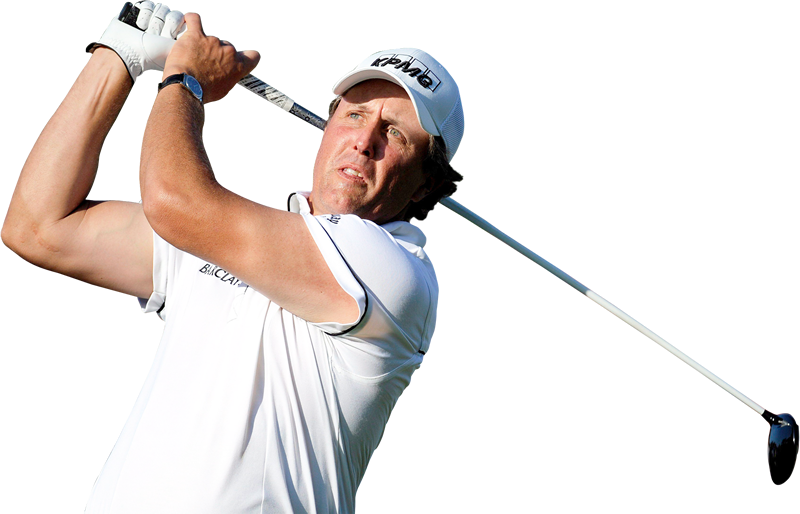
Contact Michael Holden
Easts Leisure & Golf Club
2 Tenambit St, East Maitland NSW
Phone: 02 4933 7512
Email: mholden@pgamember.org.au